Colorado’s sesquicentennial is an ideal excuse to venture beyond the famous resorts and mountain towns.
This weekend marks Colorado Day and the 150th anniversary of Colorado’s admission to the Union on Aug. 1, 1876. Becoming the 38th state during America’s centennial year earned it the nickname the Centennial State.
Forget Denver, Aspen and Rocky Mountain National Park.
Instead, explore the places that many travelers drive right past. Whether it’s a tiny mountain town whose marble helped build the Lincoln Memorial, a forgotten silver boomtown in the San Juans or a high-desert gateway to ancient cliff dwellings and an unlikely wine region, these three destinations prove Colorado’s best surprises often lie off the beaten path.
America’s stone quarry hidden in the mountains
As its name suggests, Marble is all about marble.

Home to just 133 souls, the town is tiny even by Colorado mountain-town standards. The nearest gas station and post office are roughly 30 miles away. Depending on the season, only one or two roads provide access to town. One of them is Schofield Pass, a notoriously rugged seasonal route requiring a four-wheel-drive vehicle.
The limited road access has also produced an unusual quirk of geography. Although Marble sits in Gunnison County, it’s effectively an exclave for much of the year. Outside the summer months, when a well-maintained shortcut is open to passenger vehicles, reaching the county seat of Crested Butte requires a drive of roughly 150 miles.
Yet this isolated community supplied stone for some of America’s most recognizable landmarks.
Quarried at roughly 9,500 feet in elevation, Colorado Yule marble was used to build the Lincoln Memorial in Washington, the Tomb of the Unknown Soldier at Arlington National Cemetery, the Colorado, Arkansas and Utah state capitols, and Denver’s Cathedral Basilica of the Immaculate Conception.
To understand how such a tiny community left such an outsized architectural legacy, begin at the Marble Historical Museum. Housed inside a former high school, the museum tells the story of the quarry, the immigrant workers who built the town and the boom-and-bust cycles that shaped its history.
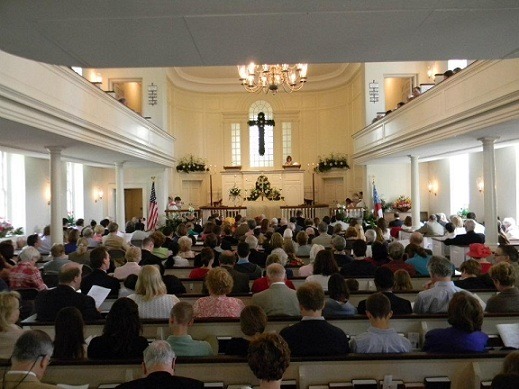
The town’s lone church tells another chapter of that story.
Originally built in 1886 as St. John’s Chapel for Episcopalians in nearby Aspen, the wooden church was dismantled, shipped by rail and reconstructed in Marble in 1908, where it reopened as St. Paul’s Church. It later welcomed Roman Catholics and Congregationalists, reflecting the practical ecumenism common in isolated Western mining towns

Natural disasters, the economic hardship of the Great Depression and U.S. entry into World War II ultimately forced the quarry and mill to close in the early 1940s. Almost overnight, Marble became a ghost town. The church survived and today serves as the multidenominational Marble Community Church.
Spend the night at the Inn at Raspberry Ridge, Marble’s only bed-and-breakfast. Overlooking the Crystal River, it is an easy walk to Slow Groovin’ BBQ.
The West’s last great boomtown
Colorado has no shortage of former mining towns, but Creede remains one of its best-kept secrets.

With a population of 257, the seat of Mineral County was the American West’s last great silver boomtown. Today, however, it receives only a fraction of the visitors who flock to better-known Ouray or Silverton.
That’s unfortunate because Creede offers everything travelers seek in a mountain getaway without the crowds.
The centerpiece of downtown is the aptly named Creede Hotel. More old-school inn than hotel, its four guest rooms sit above a restaurant. Each room honors an Old West figure connected to the colorful local history.
Immediately next door sits the Creede Repertory Theatre, which has entertained audiences every summer since 1966. This year’s season runs through Sept. 19, making late summer an ideal time to visit.
Creede has more to offer than small-town charm. Surrounded by the dramatic San Juan Mountains about five hours by car from Denver, it’s an ideal base for outdoor activities.
Ancient ruins and high desert wine
Many travelers know Cortez only as the place they pass through on the way to Mesa Verde National Park. They’re missing one of southwestern Colorado’s most rewarding destinations.
Located where the Centennial State meets Arizona, Utah and New Mexico at Four Corners, the seat of Montezuma County with its population of 8,766 punches well above its weight.
Sutcliffe Vineyards sits in McElmo Canyon, an oasis of vineyards, cottonwoods and red-rock cliffs. Reaching the winery requires about a 20-minute drive along a winding county road, but the journey is part of the experience.
When I last visited, proprietor John Sutcliffe described growing grapes at 5,340 feet in elevation as “almost biblical” because of the blazing summer heat, frigid winters and ever-present threat of late spring frosts. Yet those challenging conditions also produce distinctive wines.

Just across the road, hikers can access Sand Canyon on the southern edge of Canyons of the Ancients National Monument. Trails wind past towering Navajo sandstone formations and remarkably preserved ancestral Puebloan ruins. Hovenweep National Monument is only a short drive away.
On the other side of Cortez lies the entrance to Mesa Verde National Park, home to some 600 ancestral Puebloan cliff dwellings dating from the 12th and 13th centuries. Among them is Cliff Palace, a spectacular 150-room complex that ranks among the best-preserved archaeological sites in North America.
Stay at the family-friendly Holiday Inn Express Mesa Verde-Cortez. For dinner, Farm Bistro is a local favorite.
Although Boutique Air serves the local airport, most visitors arrive by car. Cortez is roughly four to six hours from Grand Junction, Albuquerque, Phoenix and Salt Lake City, making it an easy stop on a broader road trip across the Southwest.
Dennis Lennox writes a travel column for The Christian Post.
Dennis Lennox writes about travel, politics and religious affairs. He has been published in the Financial Times, Independent, The Detroit News, Toronto Sun and other publications. Follow @dennislennox on Twitter.